
From October 19 to 24, a 19-member delegation from Swiss Business School (SBS), led by President Bert Wolfs, visited our university to participate in the “China Business and Culture” study program. The program was jointly organized by the Office of International Cooperation, the School of Continuing and International Education, the School of Humanities, the School of Foreign Languages, and the Xiangshan School of Film and Television.
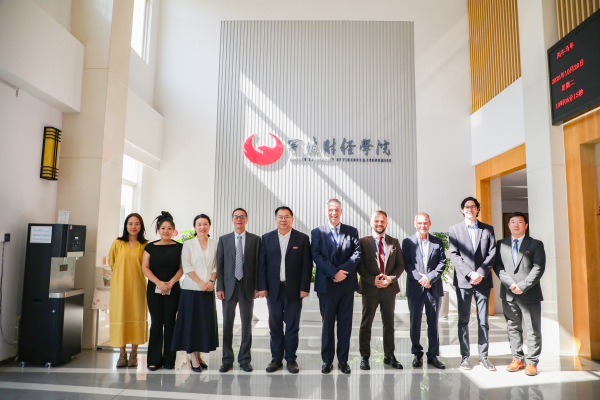
During the visit, President Wang Haohan met with President Wolfs and the delegation. He extended a warm welcome to the visitors and introduced our university’s educational strengths, development of business-related disciplines, and progress toward obtaining authorization to offer master’s degree programs. Wang expressed his hope that the study program would serve as an opportunity to deepen practical cooperation between the two universities in faculty and student exchanges, joint curriculum development, and other areas.
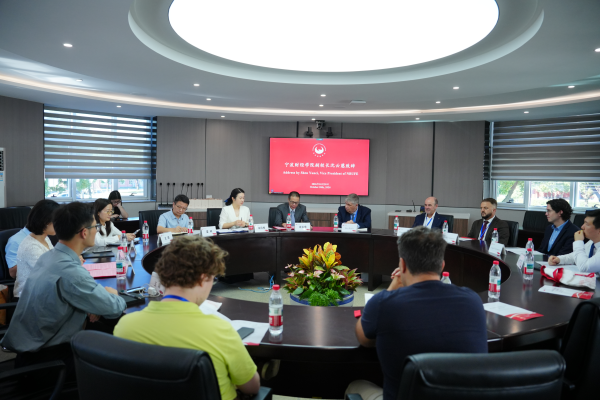
President Wolfs provided an overview of SBS’s strengths in business education and its international development strategy. The two sides held in-depth discussions on joint educational programs, student exchanges, credit recognition, and research collaboration, reaching a consensus on several areas of potential cooperation.
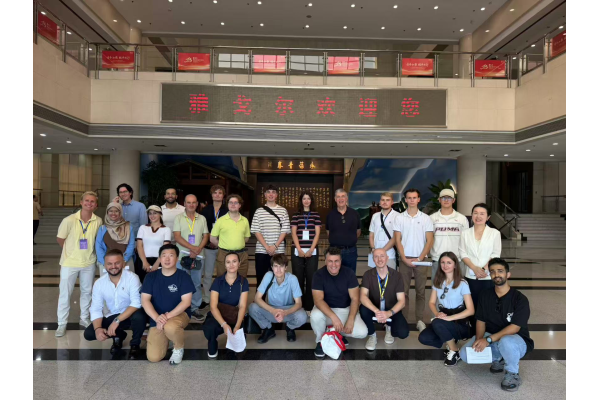
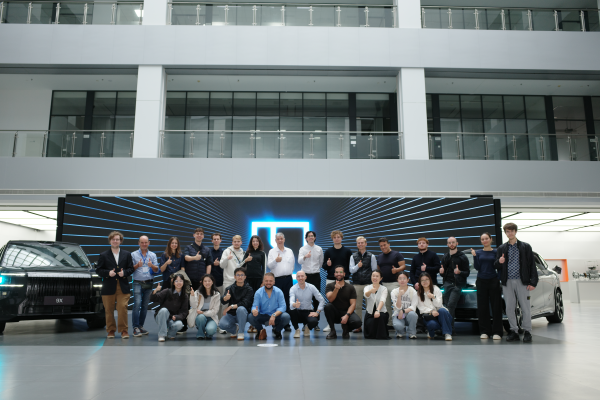
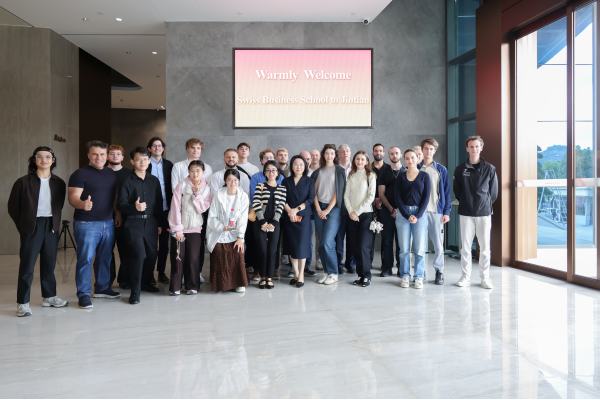
The SBS delegation visits leading enterprises in Ningbo.
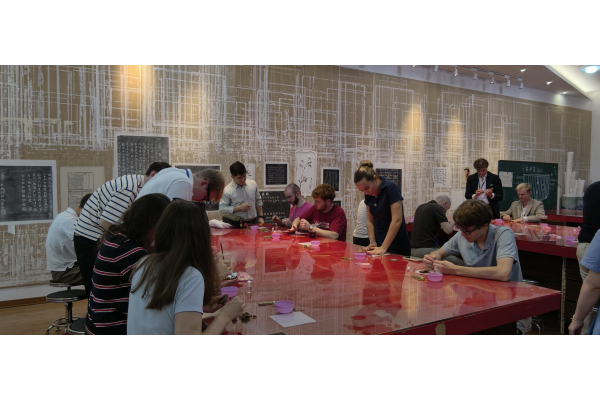
On October 20, an opening ceremony was held to officially launch the study program. Vice President Shen Yunci welcomed the delegation on behalf of the university and introduced its internationalization initiatives and approach to business education. She expressed the hope that participants would gain a deeper understanding of Chinese business practices and traditional culture through academic sessions, company visits, and cultural experiences. She also looked forward to expanding cooperation between the two institutions.
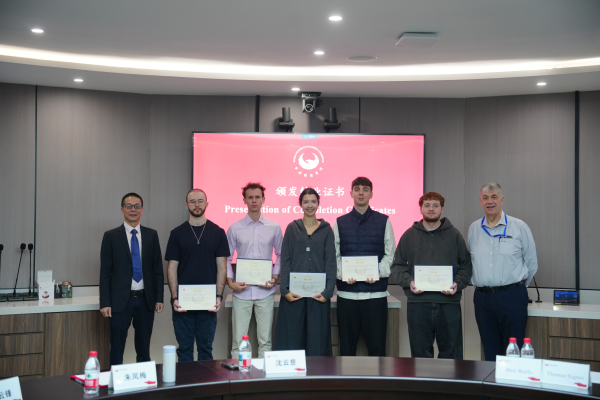
Shen Yunci (first from left), Vice President of NBUFE, presents certificates of completion to participants and poses for a group photo.
During the program, the delegation visited several leading enterprises in Ningbo, including Youngor Group, the ZEEKR Intelligent Factory in Meishan, Jintian Copper, and AUX Group. These visits offered participants firsthand insights into the development of China’s private enterprises and the internationalization of its advanced manufacturing sector.
The delegation also visited Xiangshan Film and Television City and participated in traditional Chinese cultural activities organized by our university. Through these experiences, participants gained a closer understanding of China’s cultural and creative industries and the distinctive appeal of traditional Chinese culture.
On the morning of October 23, the program concluded with a closing ceremony. Vice President Shen Yunci presented certificates of completion to all participants on behalf of our university and joined them for a group photo.
President Wolfs spoke highly of our university’s educational achievements and expressed his sincere appreciation for the warm hospitality and thoughtfully designed program. Members of the delegation were particularly impressed by Ningbo’s intelligent manufacturing industry and rich historical and cultural heritage. They expressed their willingness to share their experiences with people in Switzerland and promote greater understanding of Ningbo’s economic vitality and China’s development achievements.
Since signing a cooperation agreement in March 2026, our university and SBS have maintained close communication. Jointly planned through several rounds of discussions, this study program marked the first faculty and student exchange initiative between the two institutions. It also represented an important step in our university’s efforts to expand international educational cooperation and strengthen people-to-people exchanges.
Looking ahead, our university will continue to deepen its partnership with SBS, develop diverse platforms for two-way exchanges, and further advance the internationalization of its educational programs.
(Written by: Qin Qian, College of Continuing Education and International Education; Photography by: Tong Xinlei, Office of Communications; Reviewed by: Hu Shangui, College of Continuing Education and International Education; Zhu Fengmei, Office of International Cooperation; Wang Rui, Ningbo Municipal Education Bureau)